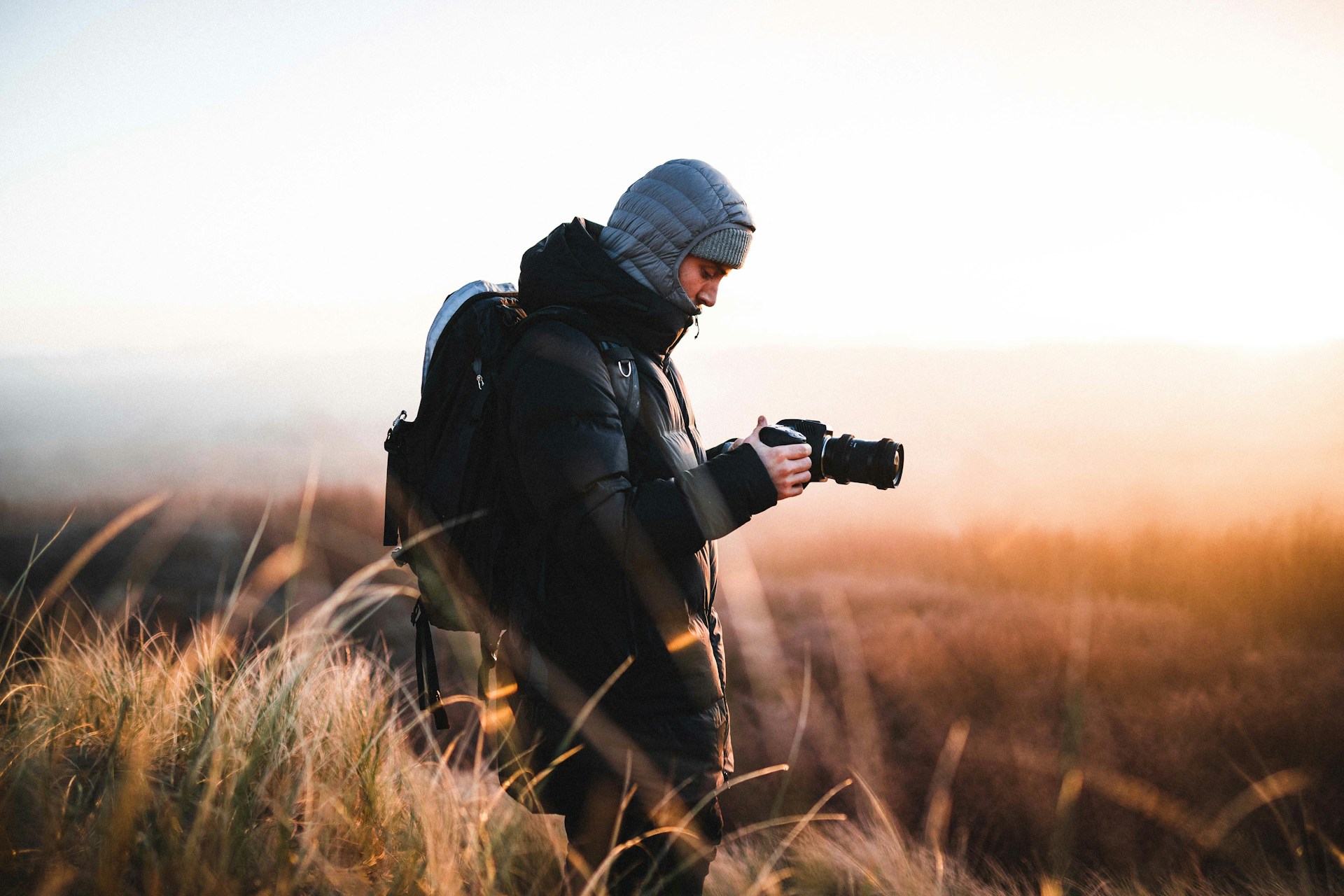
Learning photography often begins with curiosity and a desire to capture moments meaningfully. Many new photographers quickly discover that owning a camera does not automatically lead to great images. Understanding beginner photography tips can make a significant difference in how quickly someone improves their skills. Photography combines creativity with technical knowledge, and beginners who learn both aspects gradually become more confident with their cameras.
Beginner photography tips often focus on understanding how cameras capture light and how photographers can influence the final image. By learning these principles, beginners gain more control over their photos instead of relying entirely on automatic settings. Over time, these small improvements build stronger habits and lead to more consistent results. Photography is a skill that grows through practice, observation, and a willingness to learn from each photo taken.
Understanding Your Camera and Its Features
One of the most important beginner photography tips is to become familiar with your camera. Many beginners feel overwhelmed by buttons, settings, and menus, but learning how the camera works allows photographers to control their images more effectively. Cameras are designed to capture light, and understanding how light interacts with the camera helps photographers produce better photos.
The exposure triangle plays a central role in photography. It includes aperture, shutter speed, and ISO. These three settings determine how much light reaches the camera sensor and how the final photo appears. When beginners explore these settings, they begin to understand how photographers control brightness, depth of field, and motion.
Aperture controls the opening of the lens. A wider aperture lets more light into the camera, creating a blurred background that highlights the subject. A smaller aperture allows less light to pass through but keeps more of the scene in focus. This is especially helpful for landscape photography, where clarity across the frame is important.
Shutter speed controls how long the camera sensor is exposed to light. Faster shutter speeds capture quick action without blur, while slower shutter speeds can create motion effects. ISO controls how sensitive the camera sensor is to light. A lower ISO creates clearer images, while a higher ISO helps capture photos in darker environments.
Learning these camera settings is one of the most valuable beginner photography tips because it helps photographers shape the look of their images.
Improving Composition for Stronger Photos
Another important aspect of beginner photography tips involves composition. Composition refers to how elements are arranged within a photograph. Even with a good camera, poor composition can make a photo look unbalanced or uninteresting.
Photographers often use visual guidelines to improve composition. One widely used technique is the rule of thirds. This guideline suggests placing the subject slightly off-center rather than directly in the middle of the frame. When subjects are positioned along imaginary lines that divide the frame, the photo often feels more balanced and visually appealing.
Leading lines are another useful compositional technique. Roads, fences, rivers, and architectural lines can guide the viewer’s eye toward the subject. These lines naturally draw attention and help create depth within the image.
Framing is another technique photographers use to enhance their photos. Natural elements such as windows, tree branches, or doorways can surround the subject and draw focus toward it. Framing helps add context while making the subject stand out more clearly.
Background awareness is also an important part of beginner photography tips. A cluttered or distracting background can reduce a photo’s impact. Choosing a clean or simple background keeps the subject the primary focus of the image.
Learning to Work with Natural Light
Lighting plays a crucial role in photography, and many beginner photography tips focus on using light effectively. Since photography literally means drawing with light, the quality and direction of light can dramatically change an image’s mood.
Natural light is often the best option for beginners because it is easy to access and produces natural-looking results. Early morning and late afternoon provide softer light, creating gentle shadows and warm colors. These times of day are often preferred by photographers because the lighting is more flattering for both landscapes and portraits.
Midday sunlight can sometimes be harsh and produce strong shadows. In these situations, beginners can look for shaded areas where the light becomes softer and more balanced. Photographing near windows indoors can also provide beautiful natural lighting without requiring additional equipment.
The direction of light also influences the appearance of a photograph. Front lighting illuminates the subject evenly, while side lighting can highlight texture and depth. Backlighting creates dramatic silhouettes or glowing outlines around the subject.
Observing how light interacts with subjects helps beginners understand how lighting affects the atmosphere and emotion of their photos.
Practicing Focus and Camera Stability
Sharp images often result from careful focusing and camera stability. Many beginner photography tips emphasize the importance of keeping the camera steady and ensuring the subject is properly focused.
Autofocus systems in modern cameras help photographers focus quickly, but beginners still benefit from understanding how focus points work. Selecting the correct focus area ensures that the most important part of the image remains sharp.
Camera stability also plays an important role in image clarity. Holding the camera with both hands and keeping the elbows close to the body can reduce camera shake. Standing in a balanced position also helps maintain stability while taking photos.
Tripods can be helpful tools for beginners, especially when photographing landscapes, night scenes, or low light environments. A tripod holds the camera steady and allows photographers to experiment with slower shutter speeds without causing blur.
Taking multiple photos of the same subject can also increase the chances of capturing a perfectly sharp image. This simple habit is commonly recommended in beginner photography tips because it improves the likelihood of success.
Beginner photography tips provide a foundation for developing strong photography skills. By learning how cameras capture light, improving composition techniques, understanding natural lighting, and practicing focus and stability, beginners gradually gain more control over their images.
Photography is both a creative and technical process. Each photo offers an opportunity to experiment, learn, and improve. Beginners who practice regularly and pay attention to these fundamental photography principles often see steady progress in their work.
Over time, these beginner photography tips become second nature. As photographers grow more comfortable with their cameras, they begin to explore new styles, perspectives, and creative ideas. With patience and practice, anyone can transform simple snapshots into meaningful photographs that capture moments with clarity and emotion.